Bioremediation

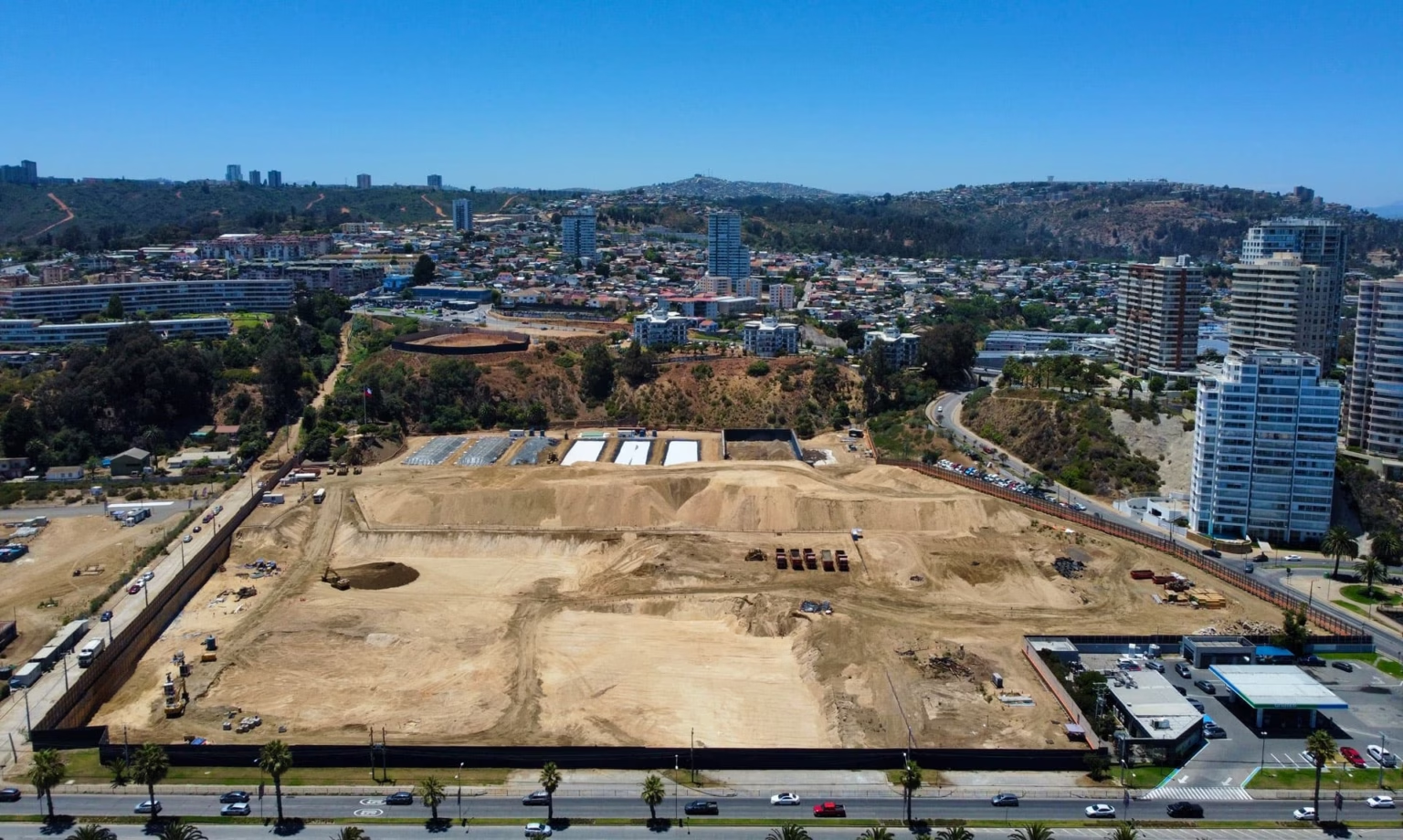
We are implementing a world-class bioremediation process.
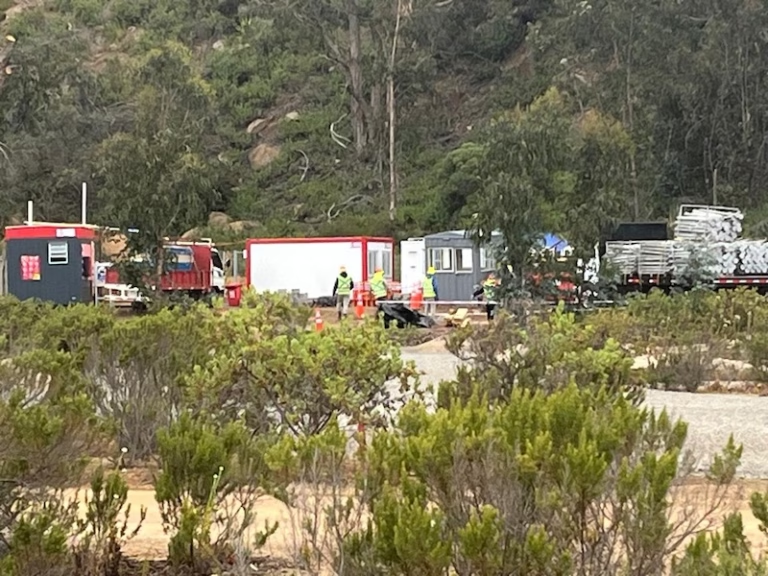
All on-site activities are subject to a comprehensive monitoring and mitigation framework, consisting of coordinated and continuous actions designed to safeguard the safety of the surrounding environment.

Environmental Monitoring Platform

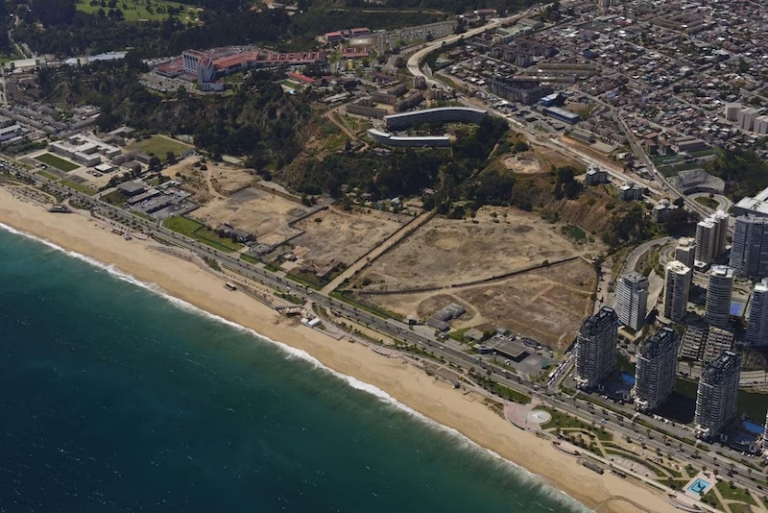
Las Salinas, Viña del Mar.

Biopilas
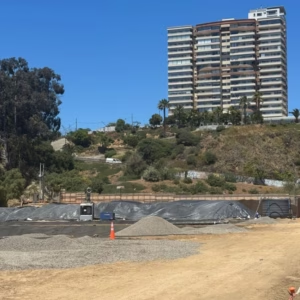
Cubierta nocturna

Los acopios de suelo a tratar quedan cubiertos con doble geomembrana durante la noche, para mitigar cualquier molestia en el entorno.
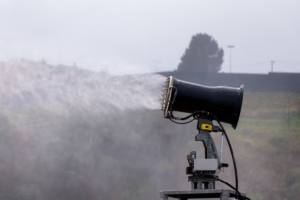
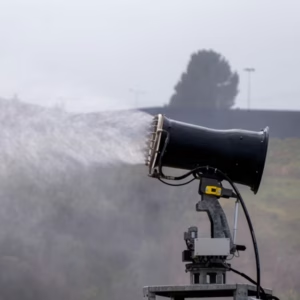
Nebulizadores

Equipos que generan una fina niebla de agua que atrapa las partículas en suspensión, mejorando la calidad del aire y evitando molestias en el entorno cercano.
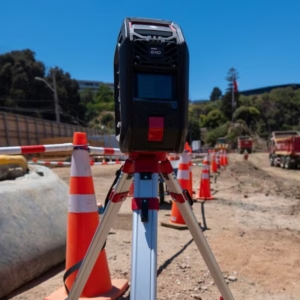
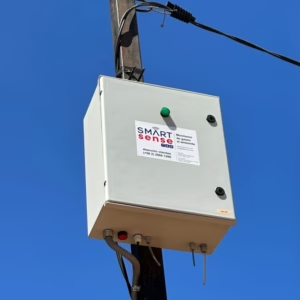
Faro de monitoreo

Monitor ambiental de área que detecta gases, ofreciendo una vigilancia continua de la calidad del aire. Protegiendo a los trabajadores y al entorno y a la comunidad.
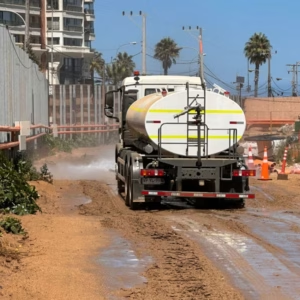
Camiones Aljibe

Camiones aljibe que mantienen húmeda la superficie para evitar el levantamiento de polvo 
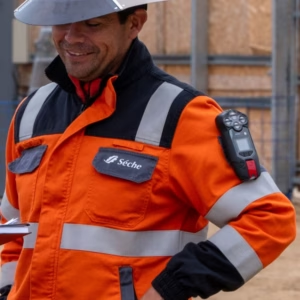
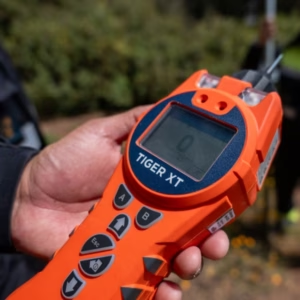
PID Trabajadores

Pequeño dispositivo que los trabajadores llevan entre su equipamiento de seguridad,
permite detectar gases peligrosos, avisando de inmediato a un centro de control, cuidando al trabajador y al entorno.
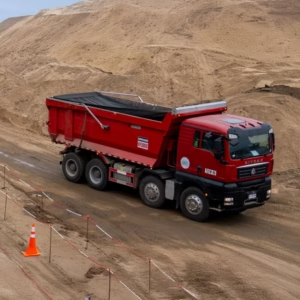
Cubierta de camiones para evitar dispersión de polvo y olores

Transporte de material en camiones con cubierta, con el fin de evitar volatilizaciones y con motor que reduce emisiones y ruido.

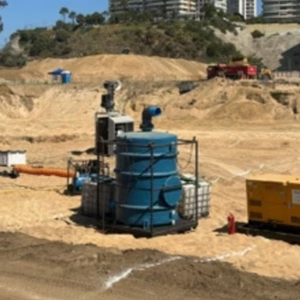
Filtro de carbón activado

Sistema de ventilación y filtración de aire, diseñado para captar, conducir y purificar aire contaminado o con olores en el entorno de trabajo, purificando el aire antes de liberarlo.
Sensores olores 01

Un sistema de sensores olores
instalados en el terreno entrega
mediciones permanentes.
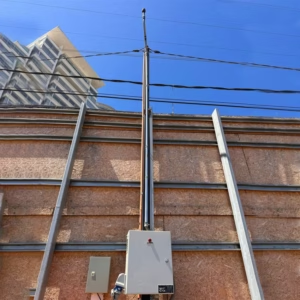
Sensores olores 02

Un sistema de sensores olores
instalados en el terreno entrega
mediciones permanentes.

Sensores olores 03

Un sistema de sensores olores
instalados en el terreno entrega
mediciones permanentes.

Sensores olores 04

Un sistema de sensores olores
instalados en el terreno entrega
mediciones permanentes.

Sensores olores 05

Un sistema de sensores olores
instalados en el terreno entrega
mediciones permanentes.

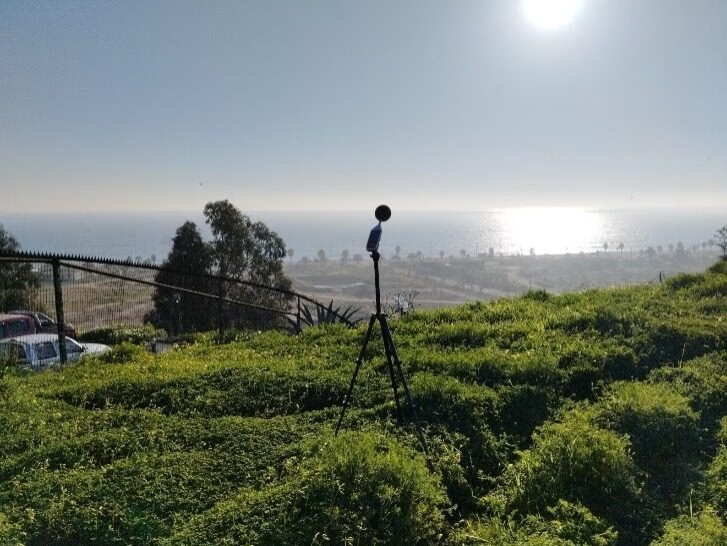
Sensores ruido 01

Contamos con sensores de ruido
instalados en el terreno para
mediciones en línea.
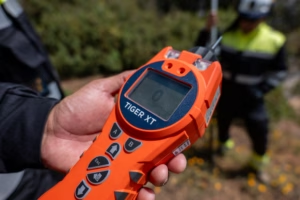
Sensores ruido 02

Contamos con sensores de ruido
instalados en el terreno para
mediciones en línea.

Sensores ruido 03

Contamos con sensores de ruido
instalados en el terreno para
mediciones en línea.

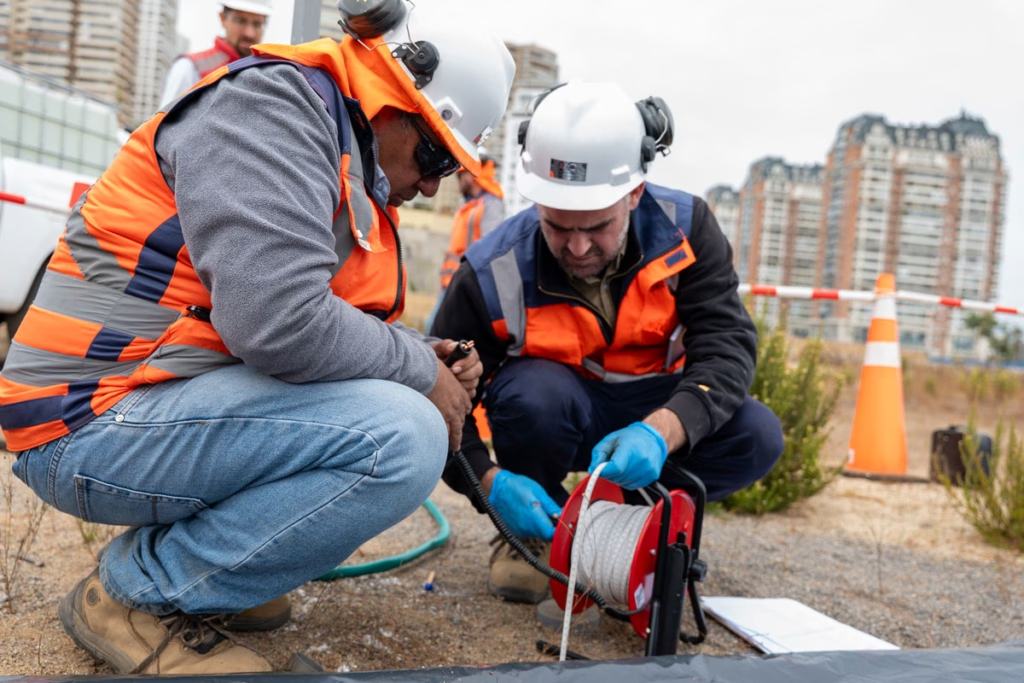
Mediciones diarias PID​ 01

Equipo en terreno recorre diariamente distintos puntos del terreno con un instrumento portátil llamado PID, para medir concentración de gases y vapores orgánicos volátiles (COV, por sus siglas en inglés) en el aire.
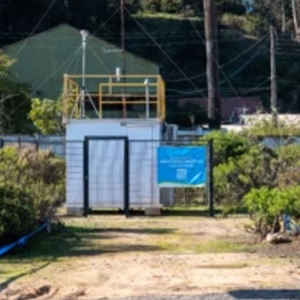
Mediciones diarias PID​ 02

Equipo en terreno recorre diariamente distintos puntos del terreno con un instrumento portátil llamado PID, para medir concentración de gases y vapores orgánicos volátiles (COV, por sus siglas en inglés) en el aire.

Mediciones diarias PID​ 03

Equipo en terreno recorre diariamente distintos puntos del terreno con un instrumento portátil llamado PID, para medir concentración de gases y vapores orgánicos volátiles (COV, por sus siglas en inglés) en el aire.

Mediciones diarias PID​ 04

Equipo en terreno recorre diariamente distintos puntos del terreno con un instrumento portátil llamado PID, para medir concentración de gases y vapores orgánicos volátiles (COV, por sus siglas en inglés) en el aire.

Mediciones diarias PID​ 05

Equipo en terreno recorre diariamente distintos puntos del terreno con un instrumento portátil llamado PID, para medir concentración de gases y vapores orgánicos volátiles (COV, por sus siglas en inglés) en el aire.

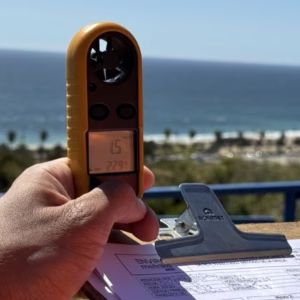
Estación de monitoreo de la calidad del aire

Ubicada en el Paño Norte,
mide parámetros atmosféricos y
contaminantes presentes en el
ambiente, con el fin de evaluar
el estado del aire y verificar que
se cumplan los estándares
ambientales establecidos por la
normativa vigente.
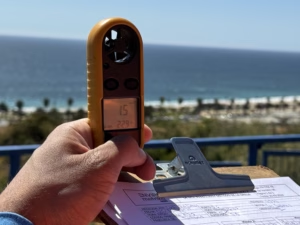
Medición narices expertas 01

Realizamos campañas mensuales
con personas capacitadas y con
olfato entrenado.

Medición narices expertas 02

Realizamos campañas mensuales
con personas capacitadas y con
olfato entrenado.

Medición narices expertas 03

Realizamos campañas mensuales
con personas capacitadas y con
olfato entrenado.

Medición narices expertas 04

Realizamos campañas mensuales
con personas capacitadas y con
olfato entrenado.

Medición narices expertas 05

Realizamos campañas mensuales
con personas capacitadas y con
olfato entrenado.

Medición narices expertas 06

Realizamos campañas mensuales
con personas capacitadas y con
olfato entrenado.

Medición narices expertas 07

Realizamos campañas mensuales
con personas capacitadas y con
olfato entrenado.

Medición narices expertas 08

Realizamos campañas mensuales
con personas capacitadas y con
olfato entrenado.

Medición narices expertas 09

Realizamos campañas mensuales
con personas capacitadas y con
olfato entrenado.

Monitoring stations

Environmental Variables Monitoring

The air quality monitoring station is operated by an Environmental Inspection Technical Entity (ETFA) certified by the Ministry of the Environment. It continuously provides critical data that enables us to safeguard air quality in Las Salinas and its surrounding area.

The data presented is collected directly from the installed monitoring devices and is processed automatically on a daily basis. For this reason, and considering the technical characteristics of the equipment and environmental conditions, the data will be subject to verification in the event of potential malfunctions or incidents.

Select the variable you want to review:

Maximum Permissible Air Quality Emission Standard

Rolling Annual Average – Las Salinas Monitoring Station

Download monitoring reports

To keep our community informed, we publish the results of the air quality monitoring conducted at our station directly in this section. The data is made available within the first 10 business days of the month following receipt of the corresponding report.

Environmental Monitoring Variables

Air

Project execution is carried out using equipment and processes designed to minimize emissions associated with soil movement and the management of stockpiles and biopiles.

These measures include continuous wetting of access roads; the use of modern and efficient machinery; vehicle speed control within the site; and an air extraction system in excavations and biopiles that uses activated carbon filters to ensure that released air is clean.

In addition, we operate an air quality monitoring station that continuously verifies compliance with applicable air quality environmental regulations.

Noise

The use of machinery for site setup, soil movement, and material stockpiling may generate nuisance noise for nearby residents.

To address this, we have installed acoustic barriers in work areas to reduce sound propagation; limited simultaneous activities in sensitive areas, such as controlling the number of machines operating when work is carried out near residential developments; and use modern, low-noise equipment to minimize noise impacts.

Groundwater

Groundwater remediation at the site is carried out in two stages.
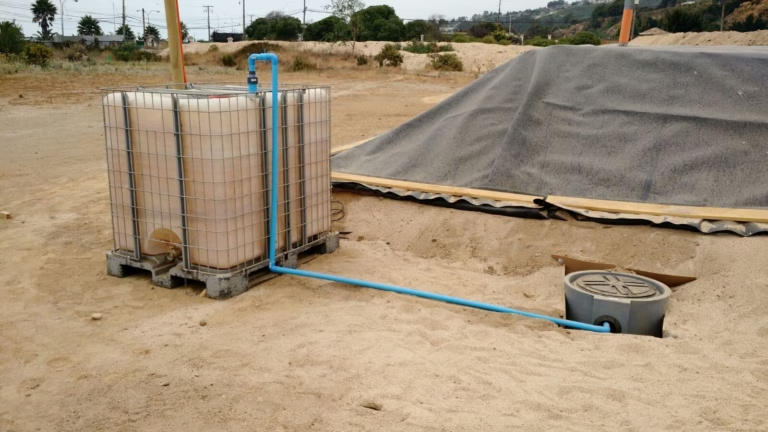
First, an in situ pre-treatment is performed, in which nutrients are introduced directly into wells installed on the site to provide additional energy to anaerobic microorganisms (which do not require oxygen to live). This is followed by treatment during soil excavation, where a specialized slow-release oxygen compound is added to enhance the bioremediation process carried out by aerobic microorganisms (which require oxygen to live).

Throughout the process, groundwater is continuously monitored to ensure that the treatment is operating effectively.

Soil

Bioremediation is carried out through the implementation of biopiles, which are enclosed mounds of contaminated soil where key components such as temperature, airflow, and nutrients are carefully controlled.

Within these biopiles, microorganisms feed on the hydrocarbons present in the soil—a process that is continuously monitored. Once the treatment of each biopile is completed, soil gas samples are collected to verify the effectiveness of the overall remediation process.

Odors

We have implemented control measures to prevent the emission of nuisance odors, including excavation in limited sections, surface wetting and sprinkler systems at active work fronts, as well as the coverage and monitoring of biopiles.

As a preventive and complementary measure, we have also implemented a comprehensive and robust odor detection system which, although not required under the Environmental Approval Resolution (RCA), will help provide greater reassurance to the community. This system is based on two fundamental pillars:

  • On-site odor monitoring, which establishes a baseline through a team of field personnel selected and calibrated in accordance with Chilean standards.

  • Online monitoring, using physical sensors installed along the perimeter of the site, which measure volatile organic compounds (VOCs) in real time, expressed in parts per million (ppm).

Learn more about the remediation project

Throughout the remediation process, every action carried out on site reflects our commitment to the care of people and the environment.

How to Participate

We offer multiple channels through which you can learn more about the remediation project, raise your questions or concerns, and contact us. Explore them here.

Latest in Bioremediation

Check out the most recent activities we have carried out as part of our land remediation work.

November 22, 2024

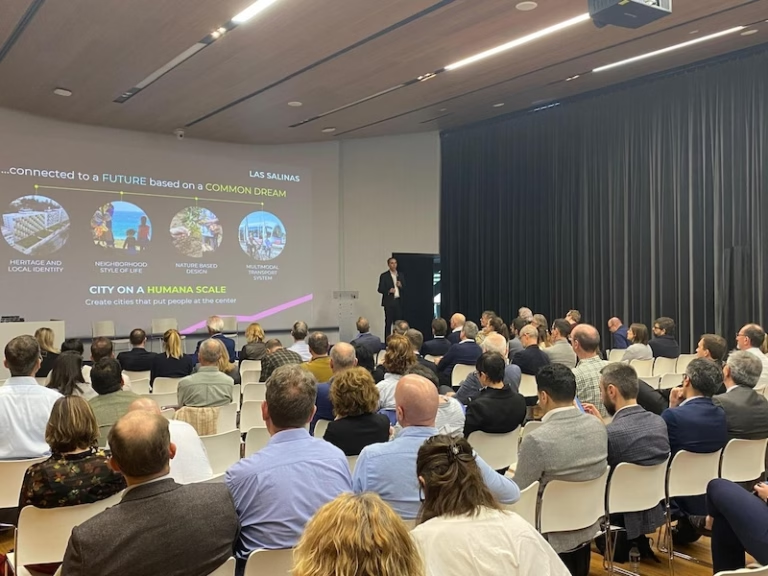
Las Salinas exhibits at leading international forum on environmental urban regeneration

November 14, 2024

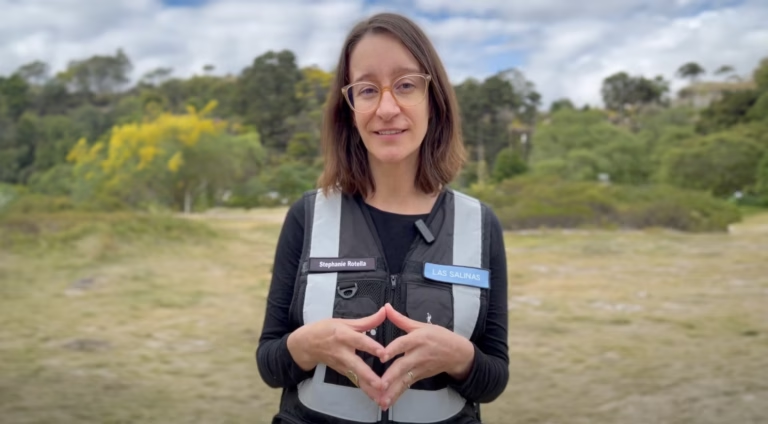
Stephanie Rotella in an interview with Periódico de la Costa

November 6, 2024

We welcome Adolfo Ibáñez University

November 4, 2024

Odour monitoring in the field and surrounding area

October 31, 2024

Las Salinas Check, construction stage

September 9, 2024

Las Salinas organizes Transformational Science Conversatory

August 2, 2024

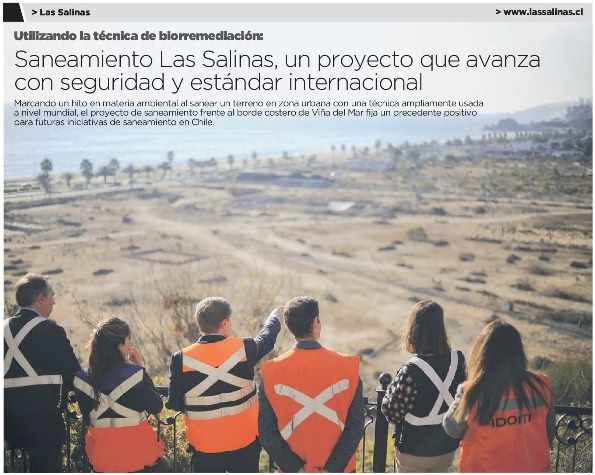
Bioremediation is a technique widely used in the world.

July 22, 2024

Detailed engineering development begins at Las Salinas on the eve of the start of the sanitation stage

July 20, 2024

Current status of Las Salinas land

5 Frequently Asked Questions on Bioremediation

A: The oil companies that had stopped operating in Las Salinas submitted a first EIA called “Recuperación Terreno Las Salinas” on December 20, 2002, which obtained an Environmental Qualification Resolution (RCA), being favorably qualified by the Regional Environmental Commission (COREMA) of Valparaíso (or regional CONAMA), through Exempt Resolution No. 203 of October 7, 2004.

The first stage of remediation of the Las Salinas site was carried out between 2009 and 2013, during which time 47 thousand tons of contaminated soil were removed and the surface and subsoil facilities of the fuel distribution companies that operated until 2000 were dismantled. This explains why the first meter of soil on the site has been completely remediated.

After the first phase of remediation, studies established that the major contamination of the soil is associated with hydrocarbon compounds, which are located between 5 and 8 meters deep.

A: Bacteria are everywhere on a massive scale, in gardens, in parks, in our refrigerator, etc. So far, after more than 70 years of a naturally activated process, there is no record of them being a threat to populations, because they are bacteria adapted to surplus and remaining hydrocarbons, and not to human pathologies.

A: It is impossible for bacteria to travel to the surrounding dwellings or beyond, let alone in a non-homogeneous environment.

The movement of bacteria is on a microscopic scale, imperceptible to human measurement standards; their world (cosmos) is reduced to a dimension not perceptible to man. Moreover, bacteria cannot fly.

A: Because there is no pre-existence in the site that we can take as a reference, the ruderal (colonizing species in uninhabited or abandoned sites) present do not do phytoextraction, fundamentally because the contaminants are below 6 to 7 meters in the subsoil. Even if we bring them to the surface to force phytoremediation, what the species to be incorporated will do is to change the contaminant matrix, that is to say, the contaminants will be extracted by the plants that would then have to be eliminated in another way. In addition, there are no tree species to clean up coastal soils where the substrate is mineral (sand), with brackish soils. Clearly a technique that does not apply to this type of site and soil type.

A: Because the source of contamination to be monitored is the field itself, it is the closest location to a potential exposure and, therefore, where measurements will be highest. Monitoring within the contaminated site and not in the surrounding area helps to differentiate between contaminants coming from the field and not from other sources, such as local industry or traffic, and to evaluate the effectiveness of corrective measures in real time.